Lean vs JIT: Understanding the Differences and Choosing the Right Manufacturing Method for Your Business
Lean manufacturing and just-in-time (JIT) are two of the most widely adopted production methodologies, but they are not the same thing.
The main difference between the two comes down to approach. JIT is a business-centric approach focused on efficiency. Lean manufacturing is a customer-centric approach that focuses on using efficiency to add value to the customer.
Understanding the difference is key for manufacturers looking to cut costs without sacrificing quality or agility. Here’s a clear breakdown of how each method works, where they overlap, and when to use one over the other for your business.
Key Takeaways
- Just-In-Time manufacturing is an inventory-focused strategy that minimizes stock by producing goods only when demand exists.
- Lean manufacturing is customer-centric and evaluates every step of the business for waste, not just inventory.
- Modern lean and JIT programs increasingly rely on real-time mobile data collection, barcoding, and automation to succeed.
The 7 Wastes of Lean Manufacturing
The first step in deciding which method to use is understanding the issues they address. There are seven identified wasteful manufacturing practices, more commonly known as the seven wastes:
- Overproduction
- Waiting
- Transportation
- Inappropriate Processing
- Excessive Inventory
- Unnecessary Motion
- Defects
Understanding how your processes will work to alleviate the seven wastes is critical when deciding what philosophy to use.
What Is Lean Manufacturing?
Companies that implement lean manufacturing are looking to provide value to customers. Rather than concentrating solely on lowering a supplier’s costs, the emphasis shifts to what the consumer wants, so every step in the process is evaluated in terms of improving the customer experience.
The history of lean manufacturing has roots in the automotive industry. Henry Ford originally set up the auto dealer’s production around the flow of raw materials from beginning to end when the customer drove away in their new car. The process included standardization, reduction of waste, and just-in-time operations. These principles make up much of what lean manufacturing is today.
For instance, the first principle of lean manufacturing is to ensure every step of the process adds value to the customer. This respect for the customer has been found to increase input about items (like production design), leading to a more mutually beneficial outcome.
Eliminating wasteful materials and processes is another essential component. In lean manufacturing, the elimination of waste often means a serious look at inventory management software. For lean manufacturers, products are produced as they are ordered, rather than kept in stock.
Streamlining production is another principle for lean manufacturers. After all, the ultimate goal for lean manufacturing is to improve the production process, resulting in a happier, more satisfied customer.
Benefits of Lean Manufacturing
Benefits of lean manufacturing methodology include inventory reduction, quality improvement and a more productive labor force. For Hewlett-Packard, the implementation of lean principles resulted in:
- 75% reduction in inventory
- 100% increase in production
- 50% reduction in labor costs
These numbers show how valuable lean manufacturing can be. But it only works with proper implementation. Effective inventory tracking software for production processes is also a must.
Common Implementation Mistakes of Lean Manufacturing
Manufacturers must watch for common implementation mistakes, including:
- Lack of strategy. Define objectives, define solvable problems, and set a detailed road map.
- Lack of employee participation. Lean manufacturing only works when employees at all levels are involved in the process.
- Not focusing on the right KPIs. Lean manufacturing focuses on things that drive value to the customer. Manufacturers must ensure they are focusing on these types of metrics and not becoming distracted by the vast amounts of data that exist.
What Is Just-in-Time Manufacturing?
The Just-in-Time Manufacturing methodology evaluates every step in the production process with the goal of lowering costs and reducing lag times.
Toyota is generally credited with introducing the JIT concept about 50 years ago in response to an initiative to reduce its inventory and lower operating costs.
JIT reduced Toyota’s lead time on orders by one-third and its production costs by 50%. But JIT’s success didn’t end there. Since its inception, the system proved so successful in other operations that it became a manufacturing staple.
WATCH VIDEO BELOW: A Toyota tracking tech success story –
Benefits of Just-in-Time Manufacturing
When manufacturers embrace JIT methodology, they are hoping to accomplish three things:
- Eliminate waste
- Remove variability
- Improve output
Rather than keep large amounts of components on hand to have when needed, companies place orders more frequently, in smaller quantities.
Ideally, the process flows so that parts arrive “Just In Time” for use (instead of stockpiling), dramatically lowering the volume of inventory in the pipeline. The result? Reduced overall carrying costs.
Common Implementation Mistakes of Just-in-Time Manufacturing
The main issue with JIT methodology is fairly straightforward. The success of this approach relies on precise ordering and stocking between the business and the supplier. If this coordination is off, there is no inventory buffer and production can be delayed.
Similarities Between Just-in-Time and Lean Manufacturing
Cornerstone to JIT and lean manufacturing methodologies is the need to eliminate waste and improve efficiency. In both philosophies, waste equates to anything that doesn’t add value to the customer.
By removing unnecessary items like excess inventory or the need for production storage, throughput is optimized for faster delivery throughout the production process.
Another similarity between JIT and lean manufacturing involves the priority on customer demand. This begins by understanding what the customer actually wants.
A major challenge faced by manufacturers is creating an accurate, real-time picture of where components are in the manufacturing cycle. With product variety expanding, delivery times shortening, mounting financial pressures and increasing customer demand and expectations, manufacturers must innovate or risk falling out of the competitive race altogether.
JIT and lean both fit in today’s emphasis on agility as well as the notion that supply chains and manufacturing processes must be responsive, flexible, and dynamic. This is critical to providing customer value throughout the manufacturing and inventory process.
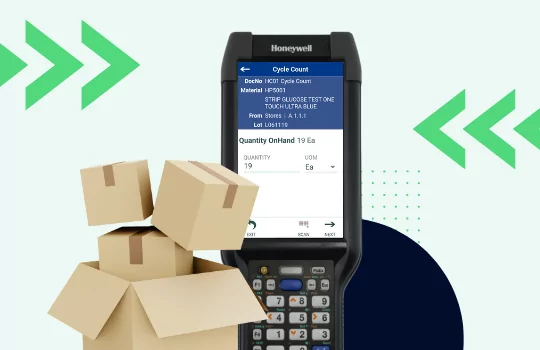
This type of agility and visibility can be achieved with the right solution. Manufacturing data collection solutions can help automate outdated paper processes and workflows. In addition, they can integrate existing business applications, create end-to-end material visibility, and empower real-time access via mobile devices.
Differences Between Just-in-Time and Lean Manufacturing
Who Is Involved In Each Approach?
JIT is mainly geared toward employees and partners involved in the manufacturing process—those on the floor as well as moving items through the supply chain.
Unlike JIT, lean manufacturing involves individuals that operate outside of the manufacturing process, such as marketing and customer service groups.
How The Production Process Differs
Another difference between just-in-time and lean manufacturing processes is how they view the production process.
JIT was designed for processes that delivered one specific item with few variations. Therefore, the manufacturing processes and employee skill sets tend to be more rigid.
Lean offers more flexibility, emphasizing the production of larger or smaller amounts depending on fluctuating market needs. Consequently, manufacturing equipment needs to be flexible enough, so companies do not have to invest in specialized devices every time they want to launch a new product.
Also, employees must have a comprehensive view of the organization. Whereas shop floor workers only interact with factory equipment and workers, lean employees collaborate with individuals, marketing managers, and other positions inside and outside the plant walls.
Differences In Overall Approach
Just-in-time manufacturing is more focused on specific aspects of production, namely inventory.
Lean manufacturing is much more comprehensive and holistic. With lean manufacturing, a supplier examines its manufacturing processes in search of ways to lengthen the product lifetime. For instance, they select a higher cost, longer-lasting element to make the product and meet those customer expectations.
Can JIT and Lean Manufacturing Be Used Together?
While JIT and lean manufacturing are different, manufacturers do not need to choose one over the other. JIT, while it can be used on its own, is often a part of lean methodology in manufacturing processes.
How To Choose Between Lean and JIT Manufacturing
JIT and lean are two management approaches that help organizations evaluate and improve their operations.
Regardless of whether JIT or lean manufacturing works best for a business, embracing automation from the shop floor to the warehouse is important to move forward.
Exploring which manufacturing methodology is right for your company, allows you to review your full supply chain model, outline key success factors, and look to new strategies to help distinguish your business from the competition.
Frequently Asked Questions (FAQ)
1. What is the main difference between lean manufacturing and JIT?
JIT is a production strategy focused on reducing inventory by manufacturing goods only when ordered. Lean manufacturing is a broader philosophy that seeks to eliminate all forms of waste, including defects, overproduction, and unnecessary motion across the entire organization.
2. Is JIT manufacturing the same as lean manufacturing?
No. JIT is a component of lean manufacturing, but lean encompasses much more, including continuous improvement, value stream mapping, and customer-centric process design. JIT focuses specifically on timing and inventory reduction.
3. What are the benefits of just-in-time manufacturing?
Key benefits of just-in-time manufacturing include reduced inventory holding costs, shorter lead times, less warehouse space needed, and improved cash flow. Toyota’s implementation of JIT famously reduced lead times by one-third and cut production costs by 50%.
4. What are common mistakes when implementing lean manufacturing?
The most common mistakes include implementing lean without a clear strategy, failing to get employee buy-in at all levels, treating lean as a one-time project rather than an ongoing culture, and not investing in the technology needed to sustain lean processes.
5. Can lean and JIT work together?
Yes. JIT is most effective when implemented as part of a broader lean strategy. Lean provides the cultural framework and continuous improvement mindset, while JIT delivers specific inventory and production timing efficiencies.
6. What industries use lean and JIT manufacturing?
Lean and JIT originated in automotive with Toyota, but they’re now used across aerospace, electronics, food and beverage, pharmaceuticals, and consumer goods. Any industry with repetitive production processes and variable demand can benefit.
7. How does technology support lean and JIT manufacturing?
Mobile barcoding, RFID, real-time inventory tracking, and ERP integration give manufacturers the visibility needed to run lean and JIT effectively. Without accurate, real-time data, JIT systems risk stockouts and production stoppages.
8. Is JIT manufacturing risky during supply chain disruptions?
JIT can be vulnerable during disruptions because it minimizes safety stock. Many manufacturers now combine JIT with strategic buffers and supplier diversification to maintain resilience without abandoning efficiency.