
Success Story
Reducing Labor Risk in Manufacturing: Aerostar’s Mobile Automation Journey
Overview
Aerostar International is a manufacturer of advanced aerospace, defense, and industrial solutions for commercial and government customers around the world. From stratospheric balloons and radar systems to protective wear and other specialized products, the company operates complex manufacturing and warehouse environments that depend on efficient execution and accurate inventory management.
Manufacturers across industries are facing increasing pressure to do more with fewer resources. According to the 2026 MHI Annual Industry Report, 56% of supply chain leaders are increasing investments in supply chain technology and innovation, including solutions that address ongoing workforce and talent shortages.
Aerostar was no exception. Labor shortages, longer hiring timelines, and rising operational demands have made labor efficiency and workforce agility strategic priorities across the organization.
To support future growth while maintaining lean operations, Aerostar extended Deltek Costpoint to the shop floor using RFgen mobile automation. The initiative helped reduce manual processes, improve productivity, and create a more scalable operational foundation.

Lean Operations Meet Labor Constraints
Aerostar has long maintained a disciplined approach to managing labor and operational costs.
The company intentionally minimizes overhead resources relative to direct labor, maximizing productivity while maintaining operational flexibility. As workforce challenges intensified across manufacturing, however, Aerostar recognized that maintaining this approach would require greater efficiency from existing processes.
At the same time, the company was beginning to experience the retirement of employees with decades of institutional knowledge, including individuals with 45 to 50 years of experience. Because many manual processes were highly nuanced, new employees often needed significant training before becoming fully productive.
Rather than simply filling open positions, Aerostar needed a way to help employees become productive faster while reducing reliance on tribal knowledge and manual processes that consumed valuable labor hours. Reducing labor risk meant creating processes that could scale with the business, regardless of workforce changes.
Before RFgen, our material pick times were lengthy and inefficient with hard copy data entry and walking from the warehouse back to the computer multiple times per order to enter transactions into Costpoint.
– Mike Zacher, Director of Manufacturing | Aerostar International
When Manual Processes Become a Labor Challenge
Before implementing RFgen, many warehouse and inventory processes relied on hard-copy documentation, manual data entry, and desktop transactions within Costpoint.
Material picking was one of the clearest examples.
Employees frequently moved between warehouse locations and computer workstations to complete a single transaction. Information was captured manually and entered later, increasing the risk of errors while delaying transaction visibility in Costpoint.
As Aerostar looked toward future growth, leadership recognized that existing processes would not scale efficiently. Extended hiring timelines, lengthy onboarding cycles, and continued reliance on manual activities reinforced the need for a more efficient and repeatable approach.
Extending Deltek Costpoint to the Point of Work
Aerostar partnered with RFgen to bring warehouse and manufacturing transactions directly to the point of activity, extending Deltek Costpoint beyond desktop transactions and day-to-day operations. Rather than requiring employees to complete work on the floor and then return to a workstation to update Costpoint, RFgen enabled transactions to be completed in real time through mobile devices at the point-of-work.
Mobile workflows were implemented across key operational processes, including purchase order receiving, material issues, manufacturing order reliefs, inventory transfers, cycle counting, physical inventory, and labeling activities.
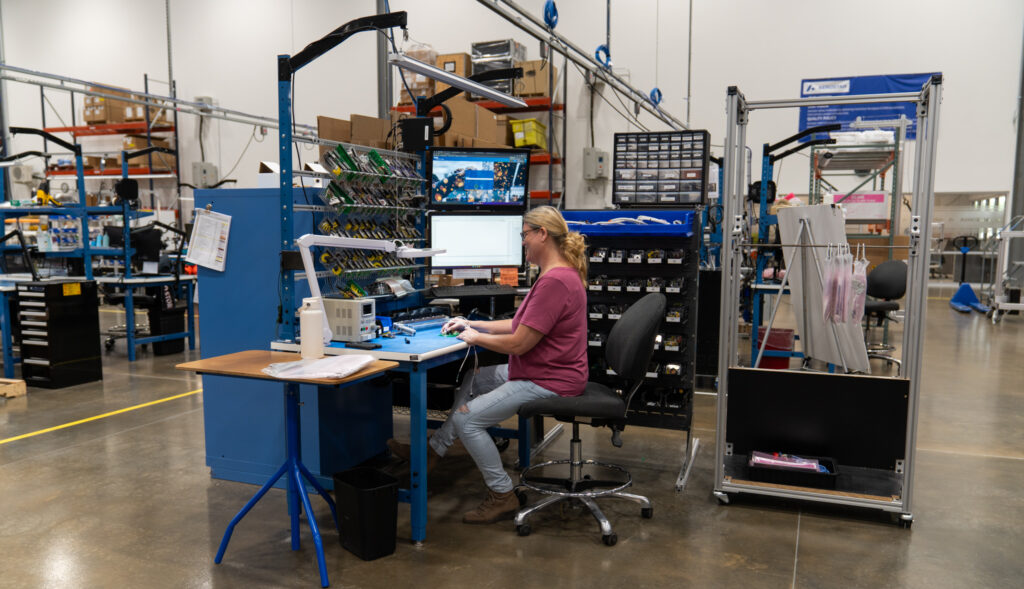 More than digitizing paperwork, the objective was to eliminate non-value-added work while improving transaction accuracy and visibility. By extending Costpoint beyond desktop transactions, Aerostar reduced manual paperwork, eliminated duplicate data entry, and enabled faster, more consistent transaction processing.
The result was a more streamlined operational environment that better aligned the system with how work was actually performed.
Building a More Agile Workforce
While productivity improvements were important, Aerostar viewed workforce agility as an equally valuable outcome. The company needed a way to onboard employees more quickly, reduce training complexity, and maintain operational performance despite labor market challenges.
Mobile automation helped standardize processes across warehouse and manufacturing activities, reducing variability and making workflows easier to learn and execute. Rather than relying on manual workarounds or extensive process knowledge, employees could follow structured workflows designed around day-to-day operational tasks.
Employees spent less time performing administrative tasks, and more time focused on productive work, creating an environment that was easier to learn, faster to onboard, and more satisfying for employees.
We are able to take employees and place them in more critical roles with less experience.
– Mike Zacher, Director of Manufacturing | Aerostar International
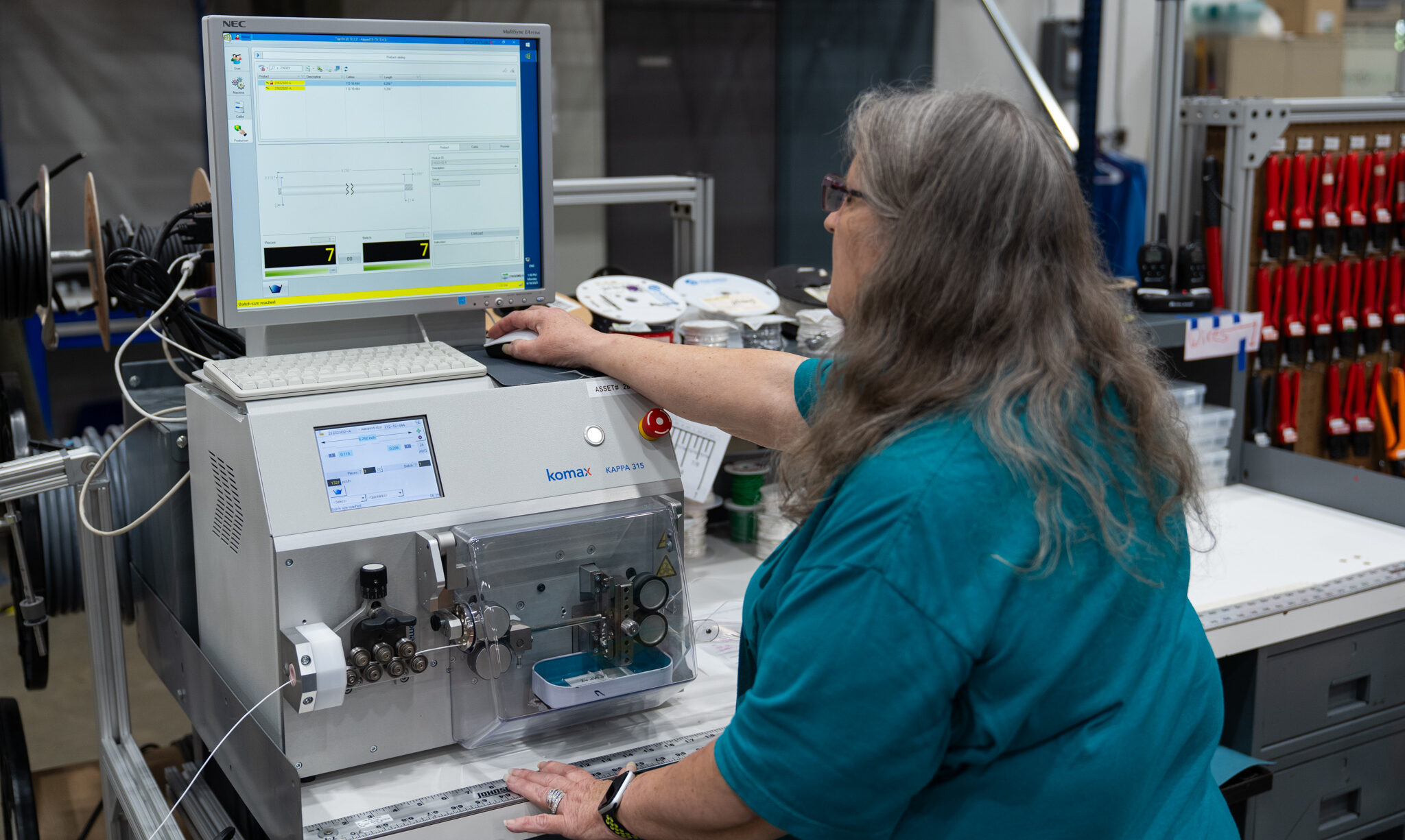
Results: Productivity, Labor Savings, and Scalability
The initiative delivered measurable operational and business results.
Aerostar reported:
- 65% improvement in productivity
- More than $84,000 in annual labor savings
- Return on investment in less than nine months
Just as importantly, those improvements were achieved without increasing material handling headcount.
The ability to absorb growth without adding labor helped Aerostar maintain its lean operating model while improving operational performance. Standardized workflows, faster onboarding, and more consistent execution also created a more scalable operating model, positioning the company to support continued growth with greater efficiency.
Supporting Future Growth
For Aerostar, the value of mobile automation extends well beyond the initial implementation. As the company continues to grow, leadership sees opportunities to expand mobile workflows into additional operational areas while maintaining the lean operating model that has long defined the business.
By extending Deltek Costpoint to the point of work, creating a more agile workforce, and reducing labor-related risk, Aerostar is better positioned to scale efficiently while maintaining its lean operating model.
